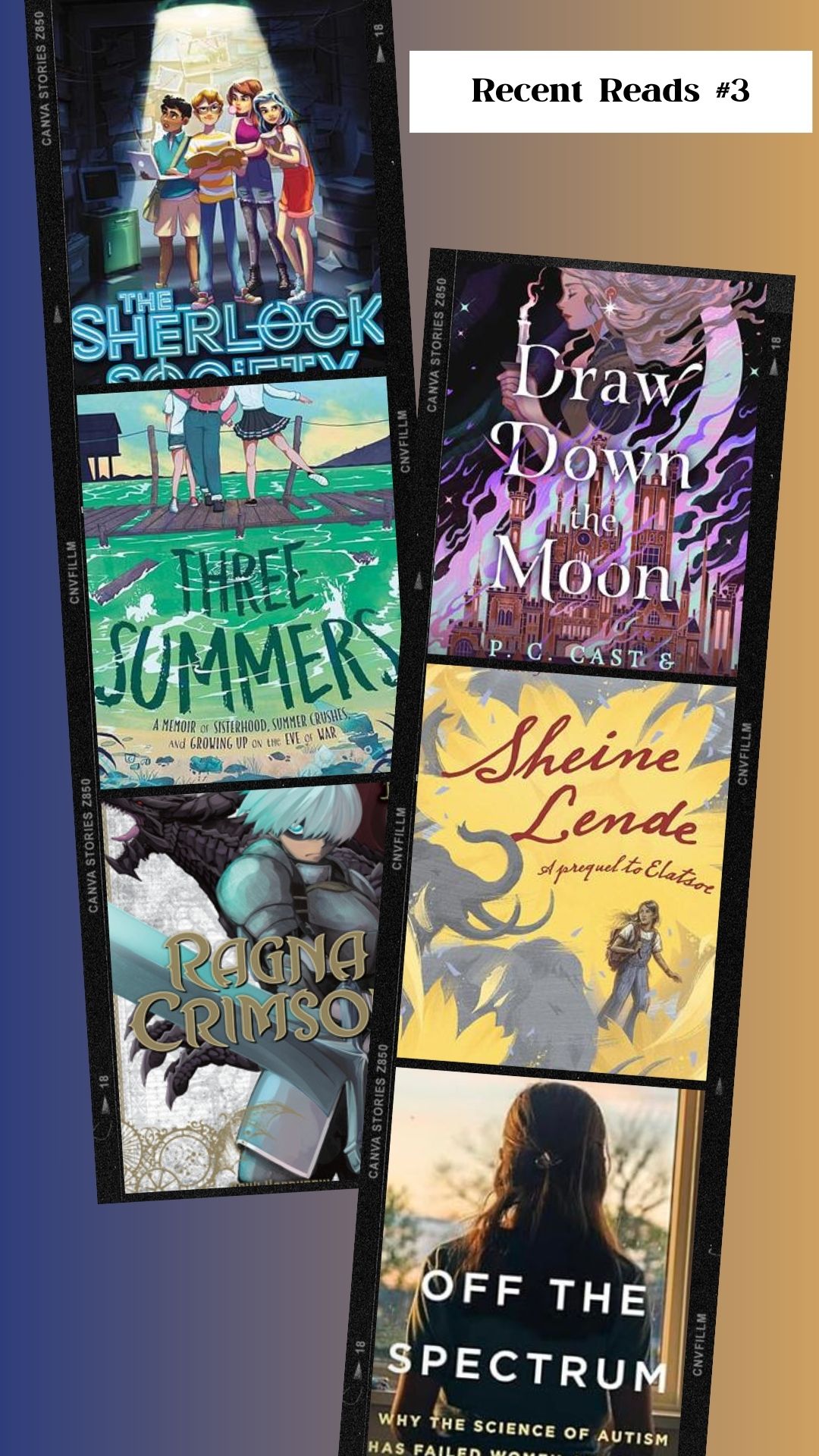

After reading City Spies a year or so ago, I set my expectations appropriately. Thus, I expected something fairly average and mildly entertaining. I ended up being pleasantly surprised when this book slightly exceeded those expectations. This book features a brother/sister pair, a couple friends, their eccentric grandfather, and their talented lawyer mother. The brother and his friends love solving puzzles and mysteries and end
up, along with the sister, deciding to start a private investigative agency called the Sherlock Society because of their last name – Sherlock – and the name’s obvious literary detective connections. This seemingly harmless endeavor gets them wrapped up in actual investigations, in a campy, entertaining sort of way. Through this Ponti even manages to show a little bit of growth in the two main characters. I will probably continue reading this series.
Having read Sabic-el-Rayess’ first memoir The Cat I Never Named, makes her middle grade prequel even more impactful. In this memoir, Sabic-el-Rayess chronicles the three summers leading up to the Bosnia genocide. I admire how she targeted these memoirs to the same age groups she was when she lived through these events. In this narrative, the middle school age Samra sees the rising tensions all around her, including the

participation of her own uncle by marriage in a militia type group that eventually evolved into one of the participating groups of a genocide. This narrative would make for an excellent book study and possible cross-curricular lesson. If read on its own – with out reading The Cat I Never Named – and without background knowledge, the reader may not glean quite as much. I definitely still recommend this book though.

I really wanted to enjoy this manga and thus discover a new series to consume. Unfortunately, I did not jive with this story and with the storytelling. I struggled to engage with the characters and found myself a bit disconcerted with one of the relationships and its strange dynamics. I will not continue on with this series.
Before starting this read, I had seen what Ashley from RealmofKidLitComics thought about the book and how she ultimately DNF’d which prompted me to lower my expectations even more. While I made it through teh book, that’s the most positive thing I can say about it. This book is definitely YA, not MG as expected since I read this for a middle grade targeted PD. The fantasy world lacks all sorts of definition

which enables the world that the authors supposedly built to overlap and contradict itself. The characters lack depth; for a character driven reader like myself, that’s a death knell. Looking back, I have no idea how I got through besides the fact that it read quickly so I got through most of it on one of my runs. I do not recommend this one.

While I really liked Elatsoe, I enjoyed this prequel about Elatsoe’s grandmother even more. Rather than have a more violent crime driving the plot like in Elatsoe (aka Elatsoe tries to solve this crime), Sheine spends this novel searching for her mother who disappeared on a rescue mission in a mysterious manner that might spell serious trouble in this world with casual acknowledgment and tepid acceptance of
various types of magic and magical beings. Little Badger also includes poignant examinations of how the poor and marginalized end up exploited by white savior types who engage in compassionate acts for selfish reasons. Even though this book could stand on its own, not only do I highly recommend it but I recommend its sequel as well.
I went into this book expecting a memoir. However, this book is written by an academic researcher in the field thus shifting the type of book I read to a much more academic tone and writing style. In this book, Rippon examined the so-called gender gap in autism diagnoses first from a historical perspective looking into the research of the most well known “fathers” of autism and then from a continued analysis of autism’s history and

potentially flawed research. While I found the prose drier than expected, I still appreciated Rippon’s careful analysis and presentation of her findings. I recommend this book but not to all since the academic nature of the prose may put some off.