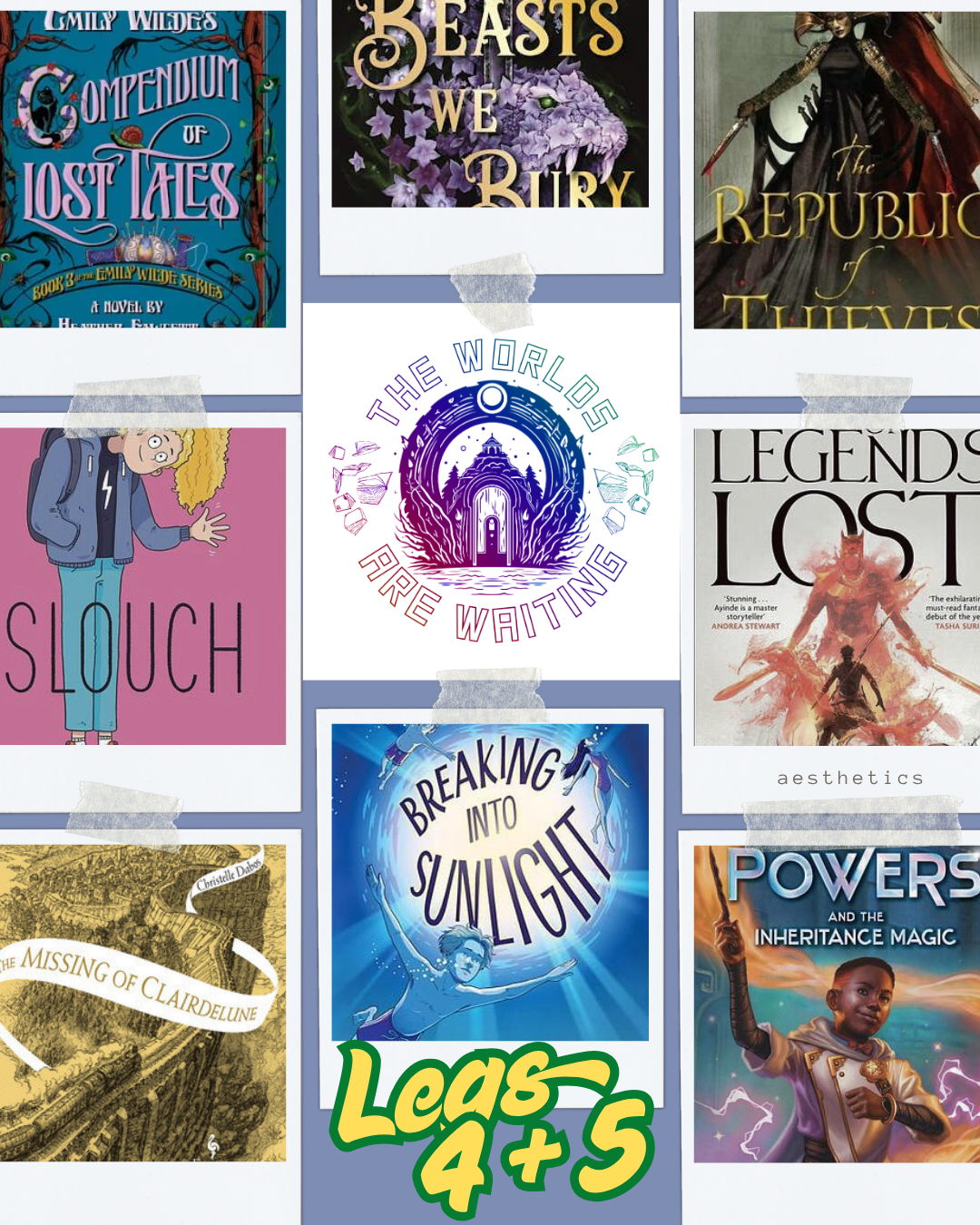

This narrative, unfortunately, lacked quite a bit of the things from the first book that endeared the series and characters to me. In fact, this conclusion to the series read like it had little connection to that first book. All of the academic fussiness that seemed to form a fundamental part of Emily’s entire being seemed to have vanished in this installment. Additionally, Emily and Wendel spent a large part of the narrative separated which deprived the reader of many of their
interactions. Even though I have not said any positive things about the book in this review, that does not mean that I think it’s a bad book. Most of my feelings about this installment stem from disappointment of what could have been. One of these days I hope to find a trilogy/series that at the very least maintains its enjoyability or even increases.
If this book had not read as quickly or easily as it did, I probably would have DNF’d. The author had a mildly intriguing premise but did nothing positive with it. Instead, the author attempted some complicated worldbuilding that served only to muddy the waters along with character motivations and decisions that made little sense but only for the primary characters; the secondary characters lacked any sort of dimension.

Then, at the end of the narrative after fully resolving the main conflict, the author wrote an incredibly confusing epilogue to introduce a cliffhanger of sorts for book two rather than leave well enough alone. Obviously, I will not pick up book two and have unhauled this book.

In this installment (unfortunately the most recent for the past decade) the readers finally meet the infamous “her” that Lock has been hung up on for the previous two books. I loved how Lynch integrated this character into the story in both timelines, current and past from which this book derives its name. lynch excels in building and expanding upon character relationships which he does so well in this one, somehow adding even more
depth to the friendship of Locke and Jean. If Lynch ever continues the series, I will preorder the sequels as soon as possible.
This book had potential but ultimately let me down. In this fictionalized version of some of her own experiences as an exceptionally tall kid in middle school, Wyman tells the story of Stevie, a character who has also appeared in an earlier companion story, who’s dealing with a recent growth spurt, parents who favor her brother, money problems for the family that seem to keep her in pants that no longer fit, a best friend making poor choices,

a snooty bully at school, and an attempt to find something she’s passionate about. That description makes it sound like a lot but Wyman weaves it all together well. My problem stems from the incredibly lackluster and downright frustrating responses from all of the adults in Stevie’s life. Stevie shows growth in the narrative but the adults remain infuriatingly selfish and yet forgiven by Stevie. Can you tell that I found all fo the adults rather unlikeable? I do not recommend this book.

I tried really hard with this book. Ayinde created an absolutely fantastic, unique, and complex world that really intrigued me. Unfortunately, for reasons I do not understand, I struggled to create a complete picture in my head of all the things going on in this massive, sprawling story. As I read I would latch onto a thread and start to put the pieces together but then get momentarily distracted and have completely lost the thread of the narrative. I, honestly, don’t
know whether this was a me problem, a book problem, or both. Unfortunately I will not continue in this particular series but will keep an eye out for future works from this author.
This book follows a trope that I have seen from several other books from this pd project list, the kid with a parent struggling with addiction. I do not think that it’s a bad thing to have a multitude of these stories. However, I think that it’s vital to tell these stories well and this one did not quite hit that mark. I think that this particular narrator of the audiobook did the narrative a disservice. His narration felt flat and a bit emotionless which

added to the difficulty of connecting to the story. Perhaps if I had read the book physically, I would have been able to connect with the main character a little bit more. I do not think that this is a bad book or that it made an egregious error in the depiction. It simply, and unfortunately, fell flat.

Dabos has created such a unique and intricate world in this series. Even though it has been a year or so since I read the first book, the plot and characterizations came back to me quickly. In this installment, Dabos delves into the history of this world, the lore behind the family spirits and the splintering of the world into separate arcs. I enjoyed this installment and look forward to the remainder of the series.
I wish this book had lived up to my mild expectations. Unfortunately this book disappointed greatly. This book copies so much from well-known Harry Potter tropes like an instant, serendipitous friendship along with a girl declaring herself their friend a la the way the so-called “Golden Trio” came about. The plotting felt clunky and the worldbuilding made no sense. Unfortunately, this book is a no for me.
