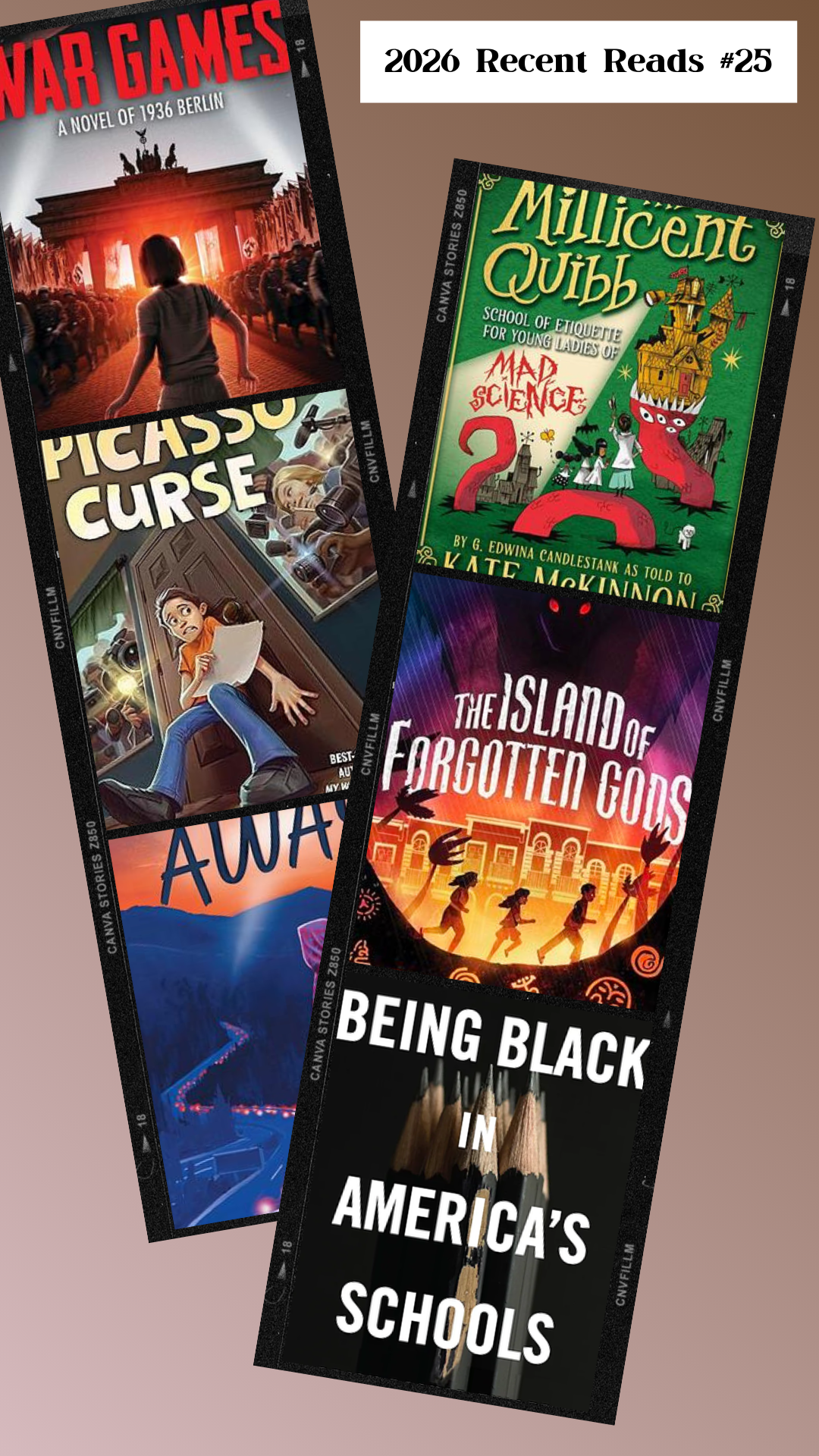

Alan Gratz’ latest novel is interesting but, in my opinion, stretches the suspension of disbelief, just a little bit too far. I do highly appreciate the way that grants used the setting of the 1936 Olympics in Berlin to address many issues happening in the current day. The situation/background of the main character was what pushed the suspension of disbelief for me. Gratz clearly kept her age at 13 to keep this book in the middle grade age
range, which is what he typically writes for. However, the various events that happen earlier in the main characters background would in reality take so much of her time that making her an Olympic level athlete, even at the level of the skills required in 1936, a bit too much to believe. The heist itself, although on its face difficult to believe, is easier in my mind to be able to suspend disbelief. I don’t think this was a bad book. I don’t think this was the best or worst book by Gratz that I have read. However, I will not necessarily recommend it either.
This book walk the line between being a middle grade realistic fiction, novel, and narrative non-fiction. With a book this short in length, the author needed to pick one or the other because both sides of the story ended up getting short shift. I also feel incredibly dissatisfied with the way that the author chose to end the novel. Clearly, he had a reason to do this. However, it ends so unsatisfactory that I know that most middle

grade readers would get to the end and be incredibly frustrated. I will not recommend this book.

This book worked better for me than the previous book that I’ve read from this author. That, however, is not a high bar to cross. The previous work that I read from this author was a dystopian survival stick type story. Those are never my favorite. In this book, the cast is much wider. That both save saved and negatively affected my enjoyment of this novel. I think that the scenario that the author set up was fascinating and unfortunately
believable. I also enjoyed the way that she laid out the text. It’s just the far too large cast of characters the kept me from being able to sync into the narrative and to enjoy it to its fullest. I think that middle grade readers would enjoy this book so it is one that I would keep on my classroom shelves.

Oh. My. Word. Both of these books were such fun to read. I highly advise reading these books as audiobooks because the author Kate McKinnon narrates them and does an

amazing job. She also infuses the narrative and the reading with slap – absurd humor, that I absolutely love. In fact, I would relate these books to the series of unfortunate events, but done better and as far more enjoyable because they do not hammer home grammatical puns, and etc., in a far to repetitious way. These books have their own take on the absurd with the idea that a mad scientist group or groups exist, and I love it. I cannot wait for the next installment.

I really enjoyed the Puerto Rican representation in this book. I feel like Puerto Rico has been coming more and more into the national consciousness and I think that that’s well deserved. I think that the author did a really good job featuring the mythology of the Taino people, and helping the main character, understand what his culture means and how he can authentically identify with that culture, even though he has spent most of his life disconnected from his Puerto Rican heritage.
This is an exceptionally written, non-fiction book that once again hammer’s home, the injustice that has been dealt to so many black and brown school children over the centuries and how it continues to be perpetuated even though many say we have “solved the problem”. This book is well researched and well written. Many educators and those involved in educational policy need to read and learn from this book.
