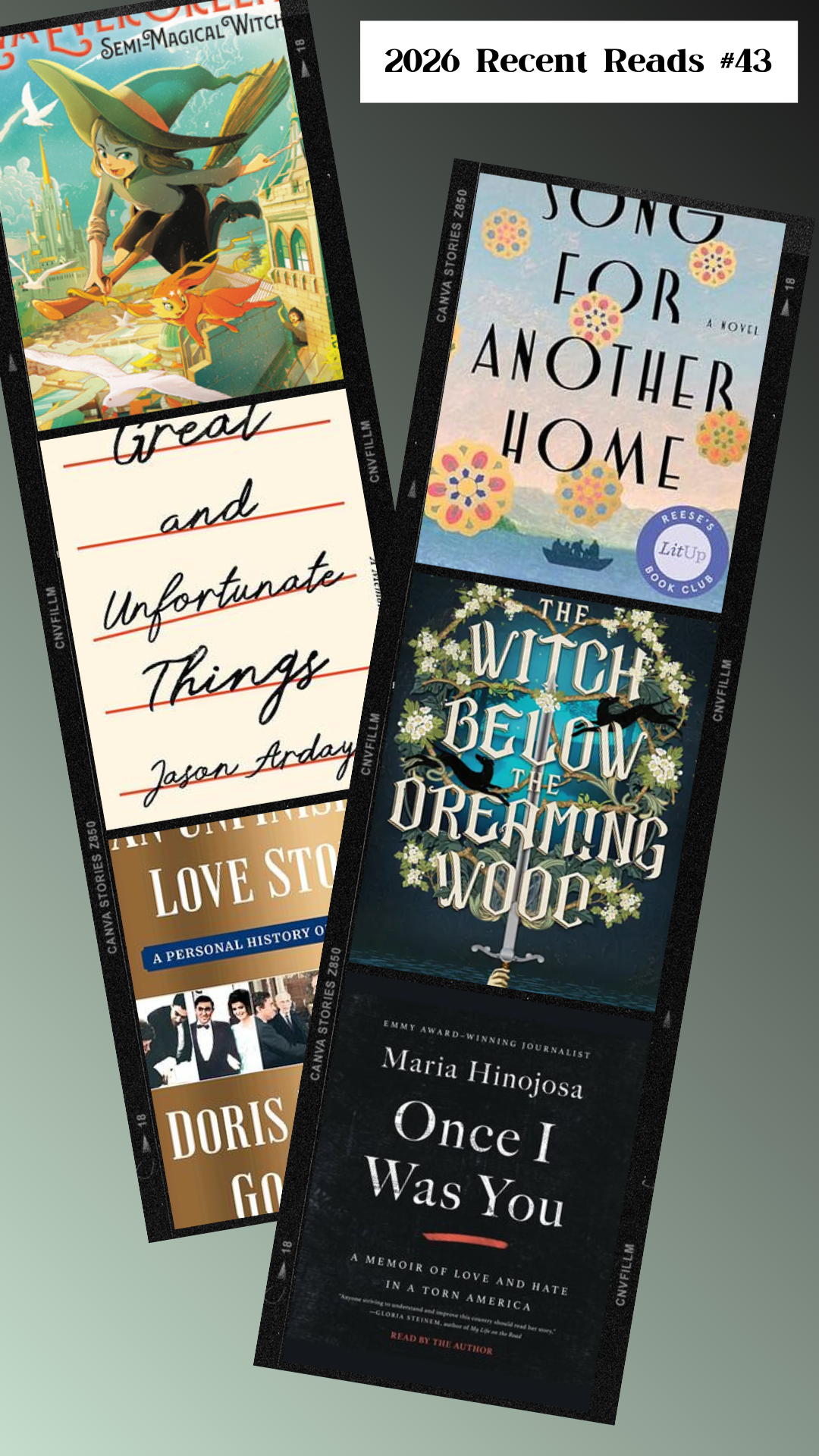

I really enjoyed this middle grade fantasy. This book is one of the five oldest books on my physical TBR, which is quite a shame because it deserved to get read much sooner than I got to it. Abe has a simple yet beautiful prose style which has the ability to enable the reader to suspend disbelief just enough to fully buy into the world that she created. I can’t wait to get to the sequel later this month.
My review/opinion of this book changed dramatically immediately after finishing, not a usual occurrence by far. When I finished reading, I entered the author’s name in Google to see an image of what the author looked like. I did not expect to find news articles published only hours before I finished about possible plagiarism claims on a few different aspects of the author’s published works, as well as the notice that he had resigned from his position at Cambridge. The article also stated that the future of his memoir, this book, was in doubt due to these developments. Prior to learning this information, I found this memoir to be well written, as well as a fascinating look at someone’s life story, and experience not often seen or valued. It’s too bad that these allegations, whether true or not, have surfaced.


(I do not rate memoirs.)
I have an incredible amount of respect and admiration for Doris Kearns Goodwin’s work as a historian. She has stellar historiography and the ability to put that history into a highly consumable format. This book takes a different road, and is more of a memoir going over a lot of monumental aspects of history through the sorting of her husband’s materials, materials he gathered from his many years in public service during the Kennedy and Johnson administrations as well as Bobby Kennedy‘s presidential run. This book combines two of my favorite non-fiction formats in a beautiful way.
Even while reading this book, I knew that I would struggle to craft a review, primarily do to the conflict between the authorial tone and the setting of the story. The story follows two related characters – although that connection is not made until much later in the novel – during the time of the Korean war. So much of the narrative read far too lighthearted and blasé for the topics being discussed. Part of that was due likely to the tone of the narrator in the audiobook, but a large part of it comes from the authorial style. This disconnect kept me from engaging deeply with the story and thus diminished my reading experience. I wish that I could give this book a more positive review, but alas, I cannot.


I continue to wholeheartedly enjoy H. G. Parry’s works. In this novel, Parry takes the tried and true – also often overdone – Arthurian legend and weaves it into the early days of World War II in England. In this version of reality, huge numbers of people have started to have dreams of King Arthur, vivid dreams which disconcerting so many due to how widespread they have become. The main character, Elaine, has not had Arthur dreams, but has had dreams of Nimue. This becomes the second point of view, a perspective that the novel split its time with. I fully engaged with this narrative, trying to figure out the connection between the characters as more and more unfolded. This lasted all the way up until the last less than 10%. I cannot explain it, but when Parry revealed the extent of the connection, and how the underlying problem of Arthur’s possible return would possibly happen, the intrigue level, for me, dropped off precipitously. This is not a bad book; I thoroughly enjoyed 95% of it, but, for me, it did not stick the landing. Parry’s writing continues to trance me, so I will continue to read her works.
Having listened to Latino USA for years, I loved reading Hinojosa’s memoir and listening to her narrate the story of her life, her time in journalism, and how she’s worked tirelessly for decades towards adequate representation and truth telling. She also bravely and honestly shares how that affected her marriage and her own psyche. I definitely recommend this memoir.
